Meta Description: Inner Mongolia corn is more than a bulk commodity. From the golden belt latitude to measurable grain quality, here is a science-backed look at what sets this region’s corn apart.
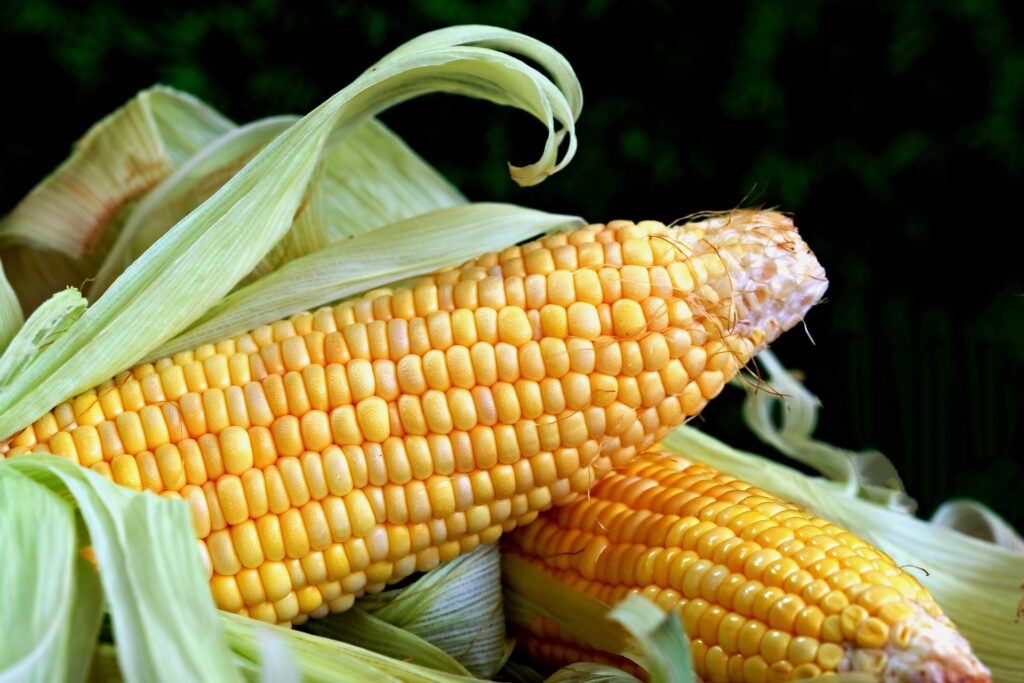
Most corn buyers know the usual benchmarks: origin, moisture, test weight, and price. But the story behind Inner Mongolia corn goes deeper than a shipping contract. Geography, climate, and decades of agronomic refinement have combined to produce grain with characteristics that matter at the processing plant and on the dinner plate. Here is the science behind the region’s corn.
The Latitude Matters More Than You Think
Inner Mongolia’s prime corn territory sits between 42 and 45 degrees north—the same band that defines the world’s major “golden corn belts.” This is not marketing language. Latitude determines solar intensity, day length, and the temperature swing between day and night.
In Ulanqab, a key sweet corn production zone at 42 degrees north, growers point to abundant sunshine and significant day-night temperature differentials as the reason their kernels come out plump and sweet. The science is straightforward: cooler nights slow plant respiration, so less sugar is burned off and more remains stored in the kernel. That translates to higher sugar content and better flavor at harvest.
The Numbers Behind the Grain
For buyers who need verifiable specs, official testing data from Inner Mongolia’s variety trials offers a concrete picture. Across multiple corn varieties tested by the Ministry of Agriculture’s quality inspection center in Hohhot, test weights consistently ranged from roughly 739 to 766 grams per liter. That is a dense, well-filled kernel—important for both milling yield and storage stability.
Crude protein levels in these trials typically landed between 8% and 10%, while crude starch content held in the 73% to 77% range. For starch processors and feed formulators, these are workable, predictable baselines. Lysine, an essential amino acid often deficient in corn, measured between 0.22% and 0.30% in the tested varieties.
One specific variety, Shengxin 8, showed test weights of 766 g/L in both 2024 and 2025 testing, with crude protein at 10.10% and 9.74% respectively. This kind of year-over-year consistency is what buyers want to see before committing to a supply relationship.
Fresh vs. Field Corn: Two Different Products
It is worth distinguishing between the two main categories coming out of Inner Mongolia.
Field corn (grain corn) is the bulk commodity used for starch, feed, and industrial processing. Tongliao and Chifeng are major production areas, with Tongliao’s yellow corn brand valued at over 30 billion RMB. The grain is prized for high test weight, high starch, and low mycotoxin risk—the latter a direct benefit of the region’s cool, dry autumns.
Sweet corn is a different product entirely. Ulanqab’s sweet corn, harvested and processed into canned or frozen form, is already exported to Japan, South Korea, Australia, and eight other markets. Local processors describe the kernels as “plump, sweet, and juicy,” a direct result of the latitude and temperature profile. For buyers in markets that demand consistent sweetness and visual appeal, this is the category worth sampling.
There is also waxy corn from regions like Linhe in Bayannur. Official quality testing found its vitamin A content at 47.4 μg/100g—more than double the reference value—alongside favorable scores for starch quality and protein. Waxy corn’s amylopectin-dominant starch gives it the sticky, soft texture that certain Asian markets prefer.
What This Means for Your Sourcing Decision
The practical takeaway is this: Inner Mongolia corn is not a single, undifferentiated commodity. It is a regional category with measurable strengths depending on what you need.
If you are sourcing for starch extraction or feed, the test weight and starch figures from official trials give you a starting point for specification discussions. If you are in the consumer-facing sweet corn trade, the latitude-driven sweetness and established export channels from Ulanqab are worth investigating. And if you deal in specialty grains, the waxy corn quality data offers a documented nutritional angle.
The best next step is always a sample. Request the specification sheet, ask for the most recent quality inspection report, and compare the numbers against your current supply. The data is there—the question is whether it fits your requirements.
Looking to evaluate Inner Mongolia corn for your market? Share your target specs and destination, and we will match you with suppliers whose product data aligns with your needs.